
A graphic design school issues a diploma, but the value of this diploma depends on its recognition by the State or the National Directory of Professional Certifications (RNCP). Since 2024, the Ministry of Higher Education’s controls on unaccredited private schools have tightened, leading to an increase in school closures. Before comparing brochures, the first instinct should focus on the administrative status of the targeted training.
RNCP Certification and Employment Rate: The Two Indicators to Check First
The marketing of a design school often relies on polished visuals, testimonials from alumni, and displayed partnerships with agencies. None of these elements provide information about the actual pedagogical quality.
Two verifiable data points allow for sorting. The first is registration with the RNCP or state approval, which guarantees that the diploma has been evaluated by an independent commission. The second is the professional employment rate six months after graduation. Since January 2025, a decree (n° 2024-1287 of November 28, 2024) requires institutions to publish this rate on the 1jeune1solution platform. The discrepancies between highly visible private schools online and public schools are clearly apparent.
To choose the right graphic design school, cross-referencing these two indicators already filters out the majority of programs whose main asset remains their communication budget.
Teacher-Student Ratio and Work-Study: What the Program Doesn’t Mention
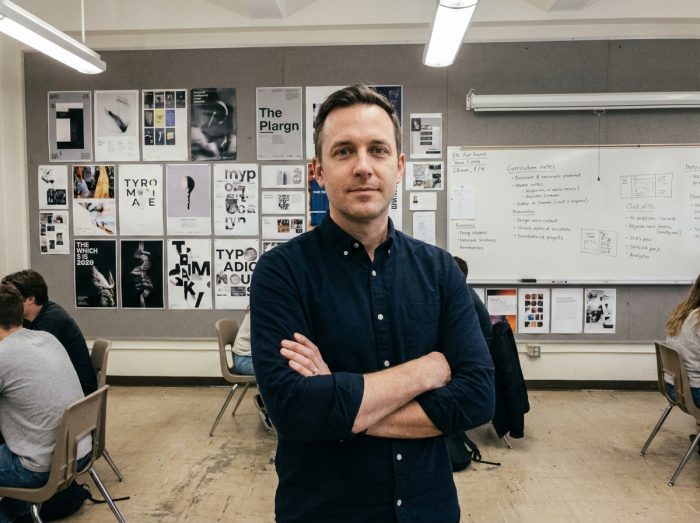
A pedagogical framework lists modules (typography, visual identity, UX, motion design), but it says nothing about the learning conditions. The teacher-student ratio varies greatly depending on the school’s status. Public schools like ENSAD or higher art schools typically have one teacher for eight students, compared to one for fifteen in many private institutions. This difference directly impacts project supervision and the quality of feedback on portfolios.
Another underestimated criterion is the format of the training. The Apec survey “Young Graduates from Design Schools 2025” (published in February 2026) confirms a growing preference among recruiters for profiles coming from work-study programs. Early exposure to real client briefs accelerates professional maturity, even if the workload is heavier than in traditional initial training.
Three points to examine during an open house or a conversation with alumni:
- The number of students per class and per project workshop, not just the overall figure displayed on the website
- The proportion of projects completed with external sponsors (companies, associations, local authorities) compared to academic exercises
- The existence of individualized portfolio follow-up, with regular feedback from an identified educational advisor
Generative AI in Graphic Design Schools: Real Training or Just a Mention
Generative AI tools (image generation, layout assistants, automated prototyping) are transforming the daily lives of employed graphic designers. The question is no longer whether these tools will be used, but how future designers will learn to integrate them without losing their ability to design independently.
Most schools mention AI in their communication without incorporating it into a structured module. Adding a half-day demonstration of Midjourney in a three-year curriculum does not constitute training. What matters is how the school articulates three distinct competencies:
- Technical mastery of creation software (Illustrator, Figma, After Effects), which remains the foundation of the profession and does not disappear with AI
- Understanding the ethical limits of automatic generation: copyright, visual biases, traceability of graphic sources
- The ability to formulate an artistic direction that the tool executes, rather than passively accepting what it proposes
To assess the seriousness of a school on this subject, requesting the syllabus of the relevant module is more reliable than reading the “innovation” page of the website. An applied ethics course in AI-assisted visual creation is a positive signal. A simple mention of “our students use the latest tools” is not.

Portfolio and Projects: The True Test of a Design Education
The diploma opens doors, but it is the portfolio that secures interviews. A graphic design education is judged by what its students produce upon graduation.
Reviewing the final projects published online (Behance, personal websites of previous cohorts) provides a clearer picture than any brochure. The diversity of projects and their grounding in real issues distinguishes demanding programs from those where exercises remain theoretical.
A solid artistic path combines visual communication projects, web creation, and brand identity developed in varied contexts. If all portfolios from the same cohort look alike, it often indicates overly rigid pedagogical framing or a lack of personalized support.
Choosing a graphic design school comes down to a methodical verification: recognized certification, published employment rate, actual supervision in workshops, concrete place of generative AI in the curriculum, and visible quality of student projects. Institutions that do not withstand this scrutiny are generally those whose marketing compensates for what pedagogy does not provide.