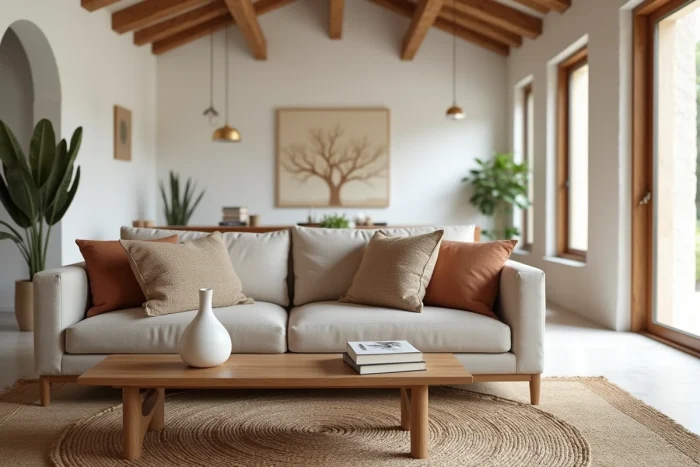
The online home decor market has changed in nature in recent years. Platforms no longer just publish selections of trends or photo galleries: they integrate simulators, room configurators, and catalogs directly linked to purchasing. This shift transforms the way we move from a decor idea to a concrete layout decision.
Online home decor: a hybrid journey between inspiration and purchase
Major decor media (Côté Maison, Elle Décoration) remain focused on editorial inspiration: reports, private visits, seasonal selections. Their strength lies in visual quality. Their limitation is the gap between the image and the act of purchasing.
On the other side, specialized online shops offer furniture and decor items categorized by room, style, or price range. You can browse collections for the living room, bedroom, or kitchen without navigating between ten different sites. Browsing the Deco Asaiss online shop illustrates this logic well: the catalog is organized to support a search by living space, from the main furniture to accessories.
The typical journey today combines these two worlds. You seek inspiration on a media outlet or social network, then switch to a shop or configurator to check feasibility. Inspiration alone is no longer enough; the path to purchase has shortened.
3D simulators and configuration tools: what they really change
3D simulators applied to interior decoration are no longer reserved for professionals. Solutions like HomeByMe allow you to draw a plan, place furniture, and visualize the result in three dimensions before any purchase. The principle is simple: you replicate the room’s dimensions, test various layouts, and observe the outcome.
This approach modifies two things. First, it reduces the risk of error regarding proportions. A sofa that looks compact in a photo may overwhelm a small living room. The simulator makes this discrepancy visible. Second, it allows you to test combinations of colors and materials without commitment, which was once the job of a decorator or interior designer.
Limitations to know before trusting a 3D rendering
Field feedback varies on the fidelity of renderings. Natural light, the actual texture of a fabric, or the grain of wood do not always translate correctly on screen. A 3D rendering remains a useful approximation, not a visual guarantee.
Free tools often offer a limited catalog of furniture. The available models may not correspond to the products you intend to buy. It’s better to consider the simulator as a tool for validating volumes and circulation rather than as an accurate preview of the final result.
Generative AI and interior decoration: beyond the gadget
Artificial intelligence tools applied to decoration have recently diversified. They no longer only serve to “imagine a style” from a photo. Some generate complete variations of a room, offer furniture consistent with a given style, and accelerate the pre-visualization phase.
The operation is generally the same: you upload a photo of the room, choose a style (Scandinavian, industrial, contemporary), and the tool produces a reworked image. Platforms like Gepetto or AIRoomPlanner claim to deliver results in seconds.
What AI does well and what it does not replace
AI excels at unlocking a creative block. When you’re torn between two directions for a living room or bedroom, seeing five generated proposals in a few clicks helps make a decision. It’s a decision accelerator, not a substitute for reflecting on the actual use of the space.
However, AI does not take into account the physical constraints of a home: electrical outlets, water inlets, door opening directions. It also cannot assess the quality of a piece of furniture or the durability of a material. For a project that goes beyond simple decorative refreshment, human intervention remains necessary.
Budget-friendly online decor: spotting the real levers
Budget-friendly decoration is a recurring angle in searches, and online content responds to it unevenly. Many limit themselves to generic advice (repainting a wall, changing door handles). A few less obvious levers deserve examination.
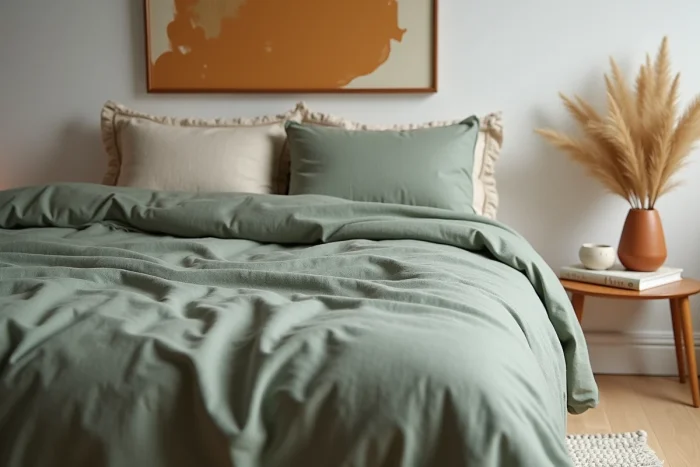
- Textiles transform a room at a lower cost. Changing curtains, adding a rug, or renewing sofa cushions alters the ambiance of a living room without touching the main furniture. This is the most favorable visual impact/budget ratio in decoration.
- Accent lighting (table lamps, string lights, wall sconces) alters the perception of a space more effectively than a change in wall color. Working with multiple light sources in the same room creates depth.
- Small decor items (vases, frames, candles) allow you to test a style before committing to more expensive pieces. This is a gradual approach that limits mistakes.
Online shops facilitate this process by filtering products by budget. You can create a coherent cart for a room without multiplying stores.
Colors and styles for the living room, bedroom, and kitchen: how to arbitrate online
Choosing colors from a screen poses a well-known problem: shades vary according to monitor calibration. A few precautions reduce the risk of unpleasant surprises.
- Order physical samples (paint, fabric, covering) before validating a color choice seen online. Most paint brands offer this service.
- Observe the chosen color under natural light and artificial lighting, as the same shade can appear cool in the morning and warm in the evening.
- Consult customer reviews accompanied by photos to see the rendering in real conditions, in non-staged interiors.
For style, coherence between pieces matters more than strict adherence to a trend. A Scandinavian living room that opens into an industrial kitchen creates a visual break. It’s better to choose a common thread (color palette, dominant material type) and apply it room by room.
Online home decor today offers direct access to tools, catalogs, and content that would have required several showroom appointments a decade ago. The real change lies less in the quantity of available inspiration than in the ability to move from an idea to a concrete project without leaving your screen.