Interior decoration is undergoing a transformation where aesthetic choices clash with new regulatory and environmental constraints. The emerging trends are no longer limited to a color palette or a dominant style: they reflect trade-offs between sustainability, budget, and the personality of the home. Enhancing one’s interior with original decor today requires understanding what is happening behind the windows of showrooms.
Upholstery Fabrics and PFAS Regulation: What the 2025 Law Changes
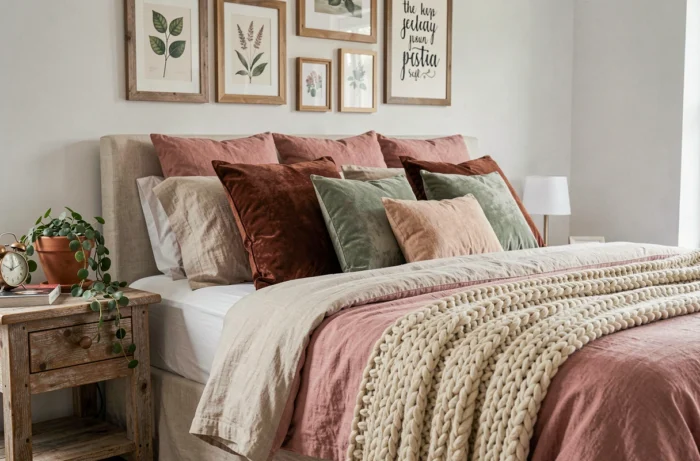
Choosing a curtain, a cushion, or a sofa fabric may seem like a trivial decorative gesture. However, the chemical composition of these textiles is increasingly subject to regulatory scrutiny.
The law n° 2025-188 of February 27, 2025 provides for an extension, starting January 1, 2030, of the ban on PFAS (per- and polyfluoroalkyl substances) to upholstery fabrics. Curtains, cushions, sofa fabrics, wall textile coverings: all these elements of interior decor are affected.
This evolution invites us to examine the composition and treatments of textiles now rather than just their aesthetic appearance. A stain-resistant or waterproof fabric may contain PFAS without the label clearly stating so. Manufacturers anticipating this ban are beginning to offer alternatives, but feedback on the durability of these new treatments varies.
For those looking to refresh their living room or bedroom textiles, checking the product’s technical sheet becomes a useful reflex, just like choosing the color. Among the resources that list textile decoration pieces, the decor on the 100,000 Watts site allows for comparison of different ranges before making a purchase.
Reuse of Furniture: A Framework that Changes the Decor Offer
The second-hand furniture market no longer relies solely on flea markets and peer-to-peer platforms. Since 2024, three approved eco-organisms (Ecomaison, Valdelia, and Valobat) have structured the extended producer responsibility framework for furniture items, with strengthened objectives for repair, reuse, and recycling.
This framework concretely modifies the available offer. Furniture retrieved from recycling centers or at the end of professional leases is refurbished and reintroduced into circulation, sometimes at significantly lower prices than new. To decorate a living room, hallway, or kitchen, this sector opens access to unique pieces that the traditional circuit does not offer.
The decorative interest is twofold: reused furniture brings a patina and a history that standardized new items cannot replicate, and it allows for the creation of an original interior without resorting to the same references as everyone else. However, the offer remains uneven across regions, and the availability of a specific model is never guaranteed.
What Eco-Design Changes for Furniture Design
The sectoral CSR framework 2025-2030, promoted by Ameublement français, encourages manufacturers to integrate dismantlability and reparability from the design stage. This concretely means assemblies by screws rather than glue, standardized components, and simpler finishes.
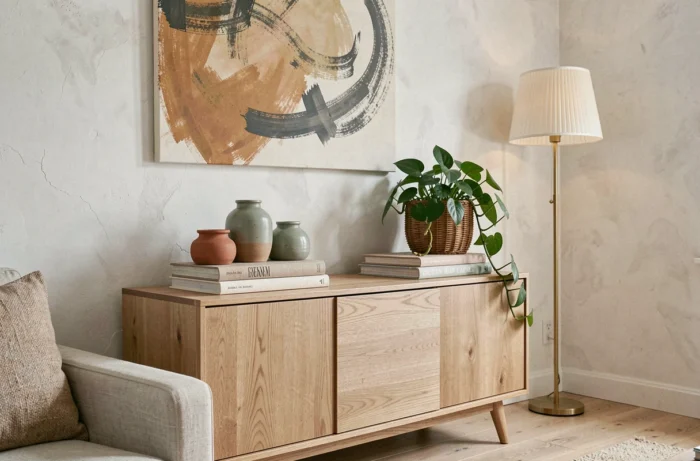
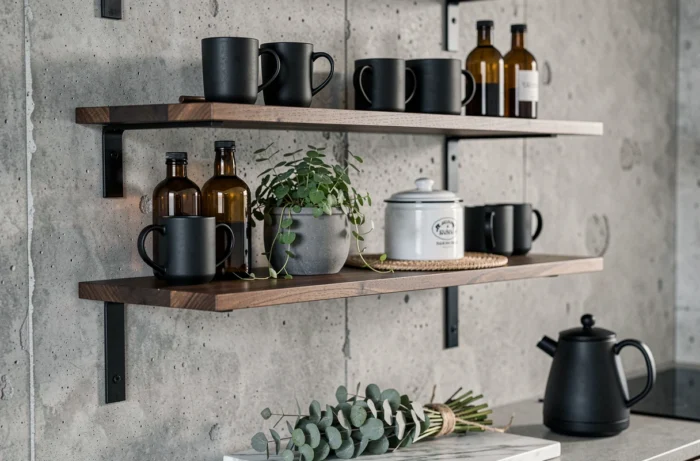
For interior decor, this trend has a direct visual effect. Eco-designed furniture favors clear lines, raw or minimally processed materials, and modular structures. The resulting style aligns with minimalist aesthetics without being sought: it is the technical constraint that dictates the form.
Warm Colors and Curves: Analyzing the Current Decor Trend
Warm beiges, terracottas, and deep browns dominate the palettes offered by decor brands and interior designers. This return of warm tones accompanies a resurgence of curved shapes in furniture, inspired by the 1970s.
This dual trend translates into concrete choices for each room in the home:
- In the living room, sofas with rounded lines replace angular models, often in terracotta or sandy beige shades.
- In the kitchen, countertops with softened edges and zellige tile backsplashes add relief without overcrowding the space.
- For the walls of the hallway or dining room, matte paint in muted tones (clay, sage green, slate blue) creates a depth that uniform white cannot achieve.
The desired effect relies on a balance between warmth and sobriety. A wall painted in a dark color works as long as the rest of the room remains light. One accent wall per room is enough to transform the atmosphere.
Noble Materials and Textures: Beyond Appearance
Solid wood, linen, natural stone, and brushed metal are making a comeback in interiors. These materials are not just an aesthetic choice: they age better than their imitations and withstand fashion cycles without dating a space.
An oak tabletop or a patinated brass light fixture retains its decorative relevance for several decades, whereas a melamine wood-patterned piece of furniture eventually reveals its era. Investing in a few pieces made from durable materials reduces the need to frequently renew decor.
Original Decor and Budget: The Important Trade-offs
Enhancing an interior does not require replacing everything. The most effective levers are often the least expensive:
- Repainting just one wall in a hallway or living room changes the perception of space for the price of a few liters of paint.
- Changing door handles, switches, or light fixtures in a room renews the style without any renovation.
- Introducing a large mirror in an entryway or narrow room amplifies natural light and visually enlarges the space.
- Adding a rug with a marked texture (jute, boucle wool) anchors a living area or dining space.
A common mistake is to accumulate decorative objects without visual hierarchy. Three strong pieces are better than a dozen scattered accessories. A sculptural vase, a large-format painting, or a remarkable pendant light is enough to give character to a room.
Original decor rarely comes from a single catalog. It results from a mix of carefully chosen new pieces, reused furniture, and textiles whose composition has been verified as much as their aesthetics. Regulatory and environmental constraints, far from limiting creativity, guide choices towards materials and forms that gain character over time.