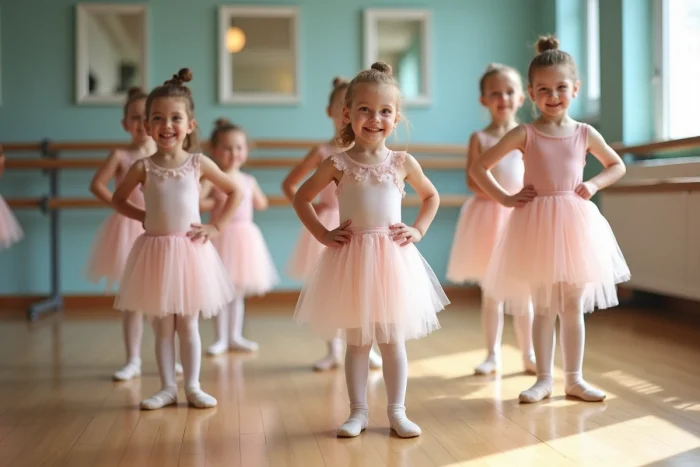
Since 2017, the number of registrations for children’s dance workshops has increased by 28% in major French cities. However, less than one in ten children regularly attends a specialized school before the age of seven. Some teachers impose strict rules on dress codes, while others prioritize freedom of movement, even in beginner classes.
In some neighborhoods, access to suitable classes remains unequal, despite the proliferation of municipal and associative offerings. Prices vary greatly, sometimes from one to three times depending on the organization, with no direct link to educational quality.
Why classical dance is increasingly appealing to children and parents
Classical dance today attracts far more than a circle of enthusiasts. In Rennes, 37 dance schools are multiplying initiation workshops, awakening classes, and short courses, proof of a demand that continues to assert itself among families. Behind this dynamism lies a search for balance: between the rigor of a codified discipline and the freedom of play, between tradition and openness to the imagination.
Awakening to dance, accessible from the age of 4, allows children to discover their physical possibilities without the pressure of classical codes. They learn to feel their bodies, to become aware of space, to build connections with others. Around the age of 6, initiation to dance gradually introduces the first notions of classical dance, without ever stifling spontaneity. Workshops often focus on a playful approach, where musical listening and personal expression take precedence over any pursuit of perfection.
This blend is important to families. Parents see in this pedagogy a rare alliance: a reinterpreted tradition, adapted to today’s world. Neighborhood associations and organizations like Le Petit Rat Porteur play a key role in democratizing the practice. Each child shapes their place, learns to express themselves in front of a group or on stage, and discovers music in its diversity. Classical dance for children thus becomes a playground, a space for self-confidence and openness, reflecting a generation that seeks meaning and shared experiences.
What concrete benefits does classical dance bring to the youngest?
Classical dance shapes not only future artists but also supports each child in their development. From awakening to dance, the youngest develop a nuanced relationship with their bodies. Every movement, every posture, is an opportunity to explore space and to take ownership of movement. During workshops, choreographic games stimulate creativity and encourage everyone to dare, propose, and invent.
Music plays a central role: children learn to align with varied tempos, to listen, and to be carried away. The technique of classical dance, with its demands, structures head posture, balance, flexibility, and poise. The floor barre, inherited from tradition, helps strengthen the body and loosen joints safely, making practice accessible to all.
Current pedagogy moves away from the austere model of the past. It prioritizes body expression, kindness, and respect for each individual’s pace. Children learn to listen to others, to share space, and to find their place in the group. What happens in the dance studio extends far beyond: confidence, emotional management, and the joy of movement are all skills that radiate into daily life.
Practical information: workshops, schedules, prices, and locations to enroll your child
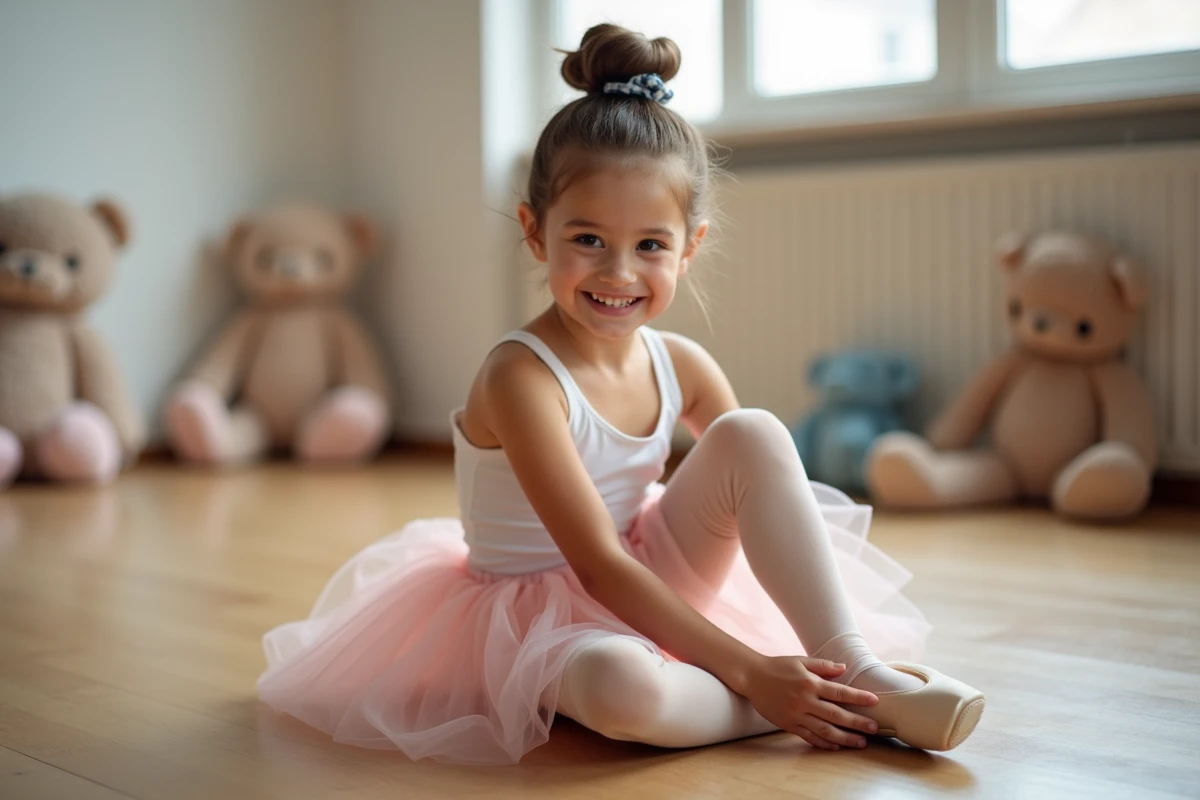
For families in Rennes, the diversity of classical dance workshops for children can be found in associations and cultural spaces open to all. For example, the Michel-Canoville cultural center offers weekly awakening classes from age 4, as well as initiation workshops starting at age 6. These sessions, designed for each age group, promote the discovery of movement, musical listening, and the joy of collective participation.
Here’s how activities and services are generally organized:
- Schedules are spread between Wednesday afternoons and Saturday mornings, making it easier for children to participate despite school constraints.
- Each workshop lasts one hour and alternates between body exercises, expression games, and shared moments in groups.
- Occasional workshops are held throughout the year, featuring external instructors: professional companies, guest choreographers, and the exploration of other styles such as Butoh or improvisation.
The financial aspect is also taken into account: prices are adapted to each family’s situation. The association implements a policy of differentiated pricing: discounts for students, families, job seekers, or for enrolling in multiple classes. Membership assistance is provided to ensure that dance remains accessible to all, without income barriers.
The events calendar allows children to participate in or attend regularly organized dance performances in the city. This connection to the local scene nurtures desire, curiosity, and sometimes gives rise to unexpected vocations, far from the spotlight of major companies.
Classical dance for children, through these lively and open workshops, paves a path where every step counts and where each child can find their own light, both on stage and in life.