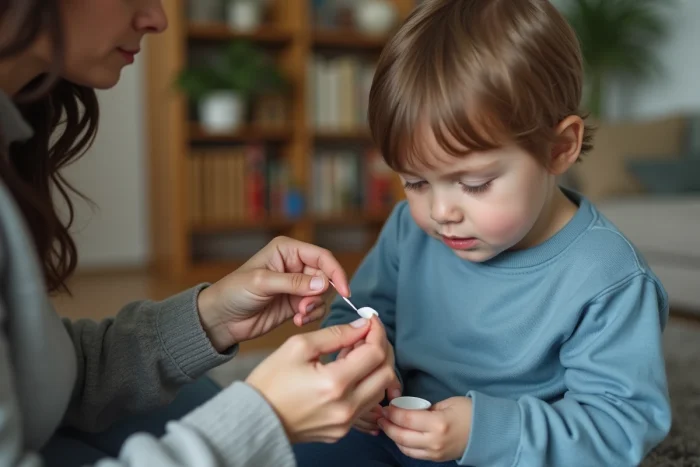
One pill too many, one extra gesture “just in case”: this is how remedies for children, meant to reassure, can end up confusing even the most attentive parents. The accumulation of treatments, under the pretext of soothing dental pain, is not without risk. The boxes of Camilia and Doliprane, neatly lined up in the bathroom, offer two different approaches, but their use requires a delicate balance, often disrupted by the fear of not doing enough.
Between medical recommendations and family habits, the line quickly blurs. Dosages, timing of use, signals to watch for: every detail matters, and the rush to relieve a child can sometimes lead to mixing everything up too quickly. It’s better to establish the basics before pulling out a bottle or a tube.
Teething: recognizing your child’s pain
The arrival of teeth transforms a smiling baby into a little irritable being. Between four months and seven months, saliva flows abundantly, gums swell, and any object within reach is immediately chewed on. Cries multiply, nights are reduced to short and uncertain stretches, rest diminishes, appetite wanes, and sometimes a fever hovers around 38°C without exceeding it. The intensity of the pain varies, appearing unexpectedly and then disappearing, prompting parents to watch for the slightest signal.
To know if the discomfort is related to teeth, a few clues stand out: cheeks rubbed insistently, unusual restlessness, crying that persists without a clear reason. Episodes of loose stools or a diaper rash may also occur, but never systematically. Interrupted nights often reflect a diffuse pain, difficult to pinpoint in the moment.
It is tempting to seek an immediate solution, but the child’s age guides vigilance: in infants, any high fever or prolonged symptom is concerning and requires medical advice. Before considering when to give Camilia and Doliprane, we observe: frequency of crying, degree of discomfort, and the child’s ability to be consoled. Each different reaction guides the next steps; administering a medication “by reflex” is never neutral.
Camilia and Doliprane: two approaches, two uses
Camilia draws from homeopathic pharmacopoeia. Its formula features chamomilla vulgaris, phytolacca decandra, and rheum, in liquid form in single doses to be administered in the baby’s mouth. These pre-dosed bottles limit the risk of germs and facilitate the action, provided the dosage is strictly respected at each episode.
Doliprane, on the other hand, falls within the realm of classic analgesics and antipyretics. It treats fever and pain but requires unwavering vigilance: its dosage is based on the child’s weight, the packaging, and the frequency of doses. One misstep, and the risk of overdose looms, with feared consequences for the liver of the youngest.
Adopting the right reflexes daily
For each treatment, here are some guidelines to do things by the book:
- Strictly adhere to the method of administration: Camilia is used in a single oral dose, Doliprane is always dosed according to the child’s weight.
- Never combine the two without medical advice: each situation is unique, and the green light must come from a healthcare professional.
- Be attentive to any side effects (digestive issues, skin rashes, sudden changes in behavior) and regularly reassess your child’s condition.
The essential? Tailor each response to the observed situation, avoiding the reflex of “everything at once” in the face of pain or parental fatigue.

Can Camilia and Doliprane be given together? Guidelines to avoid mistakes
The idea of combining Camilia and Doliprane comes up repeatedly whenever the pain seems to take over. A homeopathic treatment, a classic analgesic: should they be used together? According to current data, there is no directly reported interaction between these two products: if the dosage recommendations are followed, the risk does not skyrocket.
However, before any combination, getting the approach validated by a doctor or pharmacist remains a priority. Only a professional takes into account age, medical history, and context to adjust, or not, the combination of the two treatments.
What to watch for
To administer these medications without exposing yourself to a pitfall, here are a few points to integrate from the outset:
- The prescribed quantities must be strictly followed, especially for Doliprane: no deviations, no “little bonuses” tolerated.
- Keep an eye out for any unusual reactions: changes in bowel movements, rashes, unexpected behavior.
- Respect the intervals between each dose, and do not anticipate the next dose on a whim.
Supervised self-medication is the watchword. In case of uncertainty, a quick call to your doctor or pharmacist can avoid many unpleasant surprises and protect your child’s health over time. Every action counts when it comes to relieving without compromising the safety of the youngest. Staying attentive means giving your child the opportunity to get through this stage, tooth by tooth, with maximum serenity.