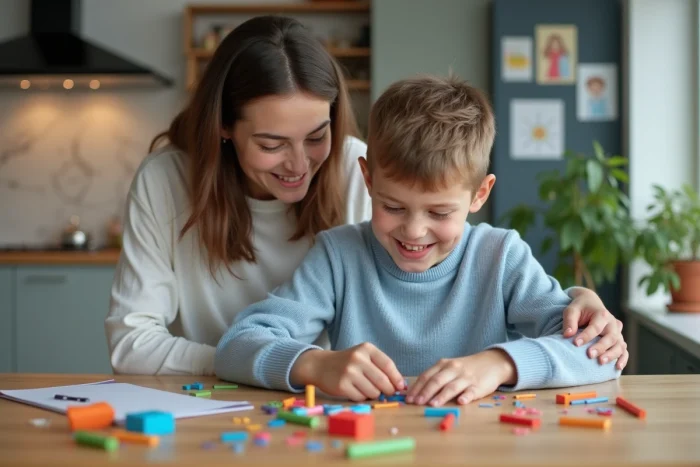
In 2025, some educators recommend integrating artificial intelligence into children’s educational routines from a young age. Other specialists emphasize the importance of preserving technology-free spaces, even for toddlers. Institutions are adapting, but the benchmarks are evolving faster than official standards.
Support systems for parenting show a 20% growth in one year. However, access to these services remains unequal across regions and socio-economic categories. New practices question the boundary between experimentation and safety.
Parenting in 2025: what changes are shaping the daily lives of families?
Parenting is transforming before our eyes. Families juggle demanding schedules, reinvent themselves in the face of pressure, and navigate between adaptation and the unexpected. At the heart of concerns: how to support a child with autism spectrum disorder (ASD), ADHD, dyslexia, dyspraxia, or dyscalculia? These realities require tailored educational responses, continuous attention to access to care, and vigilance to avoid disrupting sibling dynamics.
While support systems are multiplying, they sometimes struggle to meet all needs. Maintaining family cohesion becomes a central issue, and it is not uncommon for the sibling to receive particular support to preserve group harmony. To illustrate this dynamic, several initiatives are emerging:
- support groups, parental guidance, or specialized platforms to assist parents in their efforts.
Young parents are engaging in the search for concrete solutions: strengthening the child’s confidence, encouraging autonomy while maintaining the stability of the home.
To stay updated on the developments, tools, and resources that energize family life, the latest on Maman du Net remains a reference. Each family situation demands a unique approach, balancing innovation, mutual aid, and perseverance. The educational landscape today is built on plurality and creativity.
What do new practices look like for supporting childhood today?
Childhood support practices are taking on a new face. Coordination among primary care physicians, pediatric neurologists, psychiatrists, speech therapists, and occupational therapists is intensifying to provide tailored support for each child, particularly those with disabilities or neurodevelopmental disorders. The use of visual schedules and sensory supports is becoming embedded in routines, both at home and at school. They provide clarity, structure the days, and limit anxiety spikes related to the unexpected.
Family life is also benefiting from new technologies: connected vibrating bracelets to facilitate transitions, alternative and augmented communication apps to support non-verbal children, smart objects to secure everyday life. Artificial intelligence is beginning to personalize support by identifying specific needs and tracking each child’s progress. Virtual reality, on the other hand, is entering learning, opening the door to unprecedented experiences.
Here’s how these advancements fit into educational pathways:
- Social skills groups and role-playing games promote emotional intelligence: learning to recognize, express, and regulate emotions becomes a cornerstone of education.
- The PPS (personalized schooling project) and the PAI (individualized welcome project) tailor school to each child’s needs.
- Adapted physical activity and sensory approaches, such as music therapy, contribute to overall balance and well-being.
Digital platforms are weaving new connections: sharing experiences, practical advice, moral support. Families, increasingly informed, are also exploring the field of nutrition: microbiota and anti-inflammatory diets are joining the table to support children’s health and emotional balance.

Inspiring tips for integrating these trends into everyday life
In the face of daily challenges, families find in today’s support a concrete help. Consultation with health professionals, from the primary care physician to the occupational therapist, allows for adapting the environment for each child, especially those affected by autism spectrum disorder, ADHD, or DYS disorders. Relying on visual schedules and structuring supports offers the child reference points, facilitates transitions, and gradually nurtures their autonomy.
Introduce assistive technologies without haste: alternative communication apps, connected bracelets, educational digital tools. These innovations, far from being mere gadgets, pave the way for better communication and easier access to learning. They also strengthen the child’s confidence. Social skills groups, emotional intelligence workshops, and role-playing games are emerging as levers to cultivate empathy and trust, essential for family balance.
Here are some concrete ideas to enrich daily support:
- Join support groups or a specialized association to exchange with other families, benefit from practical advice, and enjoy a vibrant sharing of experiences.
- Request an AVS/AESH to support your child at school and ensure their inclusion in school life.
- Explore digital platforms to find resources, tools, and information tailored to each situation.
Each family navigates its own reality: listening to the child, patiently adjusting routines, and valuing progress are the pillars of respectful support. Through this approach, the entire family ecosystem gains in cohesion and trust. Navigating these changes is to take the risk, and sometimes the joy, of witnessing new forms of solidarity and shared success flourish.