A 1,000-watt engine doesn’t do it all. On paper, the power is impressive, but in the reality of the garden, some more compact devices can maneuver where the giants get stuck. The balance between maneuverability and efficiency is just as important, if not more so, than the numbers listed on the technical sheet.
The handlebar may showcase cutting-edge design, but it doesn’t matter if the weight distribution is lacking. It’s hard to guess before use; however, some robust models turn out to be maintenance-intensive and quickly reveal their limits. The power mode—gas, electric, or battery—goes far beyond a simple question of technology: each system imposes its own logic of use, constraints, and freedoms.
Understanding the Different Types of Brush Cutters and Their Uses
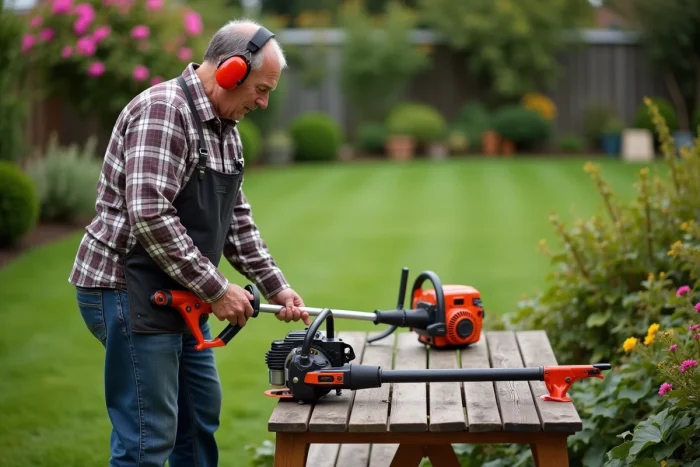
The brush cutter is an essential ally for tackling neglected or hard-to-navigate terrains, where the lawn mower gives up. Capable of cutting tall grass, underbrush, brambles, or bushes, it complements the arsenal of the modern gardener. The market is full of options: gas brush cutters for raw power, electric models for ease of use, and battery versions for freedom of movement. Other configurations exist, such as backpack machines, wheeled models, or self-propelled versions, designed to face specific environments.
For precision work, the string trimmer, or weed whacker, comes into play. It excels where the mower cannot go: along fences, around trees, or near flower beds. If the terrain is sloped or hard to access, the backpack brush cutter offers a comfortable alternative, while the wheeled version is aimed at large plots, with stability and efficiency in mind.
To clarify the options, here are the cutting tools available according to the type of vegetation:
- nylon line: ideal for fine grass and finishing touches
- blade or knife: designed for brambles, bushes, or thick grass
- interchangeable head: adapts the machine to each type of vegetation
To explore each configuration, the brush cutter comparison details the strengths and weaknesses of the main models and technologies. A must-read for anyone looking to sort through the jungle of current offerings.
What Criteria to Prioritize for Choosing According to Your Garden and Needs?
Before choosing, consider the terrain and the vegetation to be managed. On a large, uneven, or overgrown area, the gas brush cutter is essential, its engine devouring thick brambles and underbrush without flinching. On a small lawn, or for light maintenance, the electric brush cutter finds its place thanks to its maneuverability and light weight. Between the two, battery models combine autonomy, silence, and freedom of movement, perfect for regular interventions in medium-sized gardens.
The choice of the cutting head is crucial: nylon line for soft grass, blade for tough vegetation. Don’t overlook the autonomy or power: when facing demanding terrain, it’s better to be well-prepared. For steep gardens, the backpack version distributes the load better and spares the back over time.
Considering Maintenance and Safety
A reliable tool lasts longer if maintained rigorously: filters cleaned, line or blade checked, mechanics lubricated. To work safely, equip yourself: gloves, goggles, and protective clothing are essential. Sometimes, regulations come into play: in several departments in southern France, brush clearing is not an option but a requirement to limit fires. Property owners in Provence-Alpes-Côte d’Azur, Languedoc-Roussillon, Midi-Pyrénées, Aquitaine, Drôme, Ardèche, or Corsica should be sure to inquire about local requirements.
Choosing a brush cutter, therefore, means matching the tool to the reality of the terrain, the legal context, and the expected frequency of use.

Comparison of Models and Tips for Finding the Right Tool for Your Profile
Against wild grasses, the brush cutter has carved out a prime spot, from simple lawns to the wildest corners of the garden. The offerings vary: gas engine for intensive use, battery for flexibility, and corded electric for quick and uncomplicated maintenance. Consider the cutting width: nylon line for edging, blade for effortlessly cutting through thick vegetation.
The string trimmer, or weed whacker, ensures finishing touches in tight spaces. On sloped terrains or in underbrush, the backpack brush cutter distributes the load and spares the joints. For large plots, the wheeled version minimizes fatigue and maximizes productivity.
Here are the elements to check to adapt the tool to your needs:
- Interchangeable accessories: vary the cutting head (line, blade, knife) according to the vegetation and the area to be treated.
- Protection: always equip yourself with a helmet, goggles, gloves, durable clothing, and a suitable harness.
- Maintenance: prefer a model that allows quick access to the air filter and cutting head to simplify maintenance operations.
To broaden usage, some models accept other accessories: sweeper, hoe, chainsaw, hedge trimmer. An additional battery or a fast charger is useful for battery models, especially during long sessions. Experienced users will appreciate the ability to change the cutting head according to the density of the vegetation: line for edges, blade for fallow land.
Ultimately, the brush cutter is not just a simple cutting device. It is a field ally that combines power, agility, and safety, capable of adjusting to every user profile. Finding the right one is to write the next chapter of your garden’s story, without ever losing control over the nature that grows.